Remn Klime: A Practical Evaluation of Its Design Strength and Versatility
In the crowded landscape of digital typography, finding a display font that balances boldness with legibility is often a challenge for designers. Remn Klime has emerged as a distinctive option in this category, offering a visual weight that commands immediate attention without sacrificing structural integrity. For professionals aged 20 to 50 who are tasked with creating impactful headlines, marketing materials, or branding assets, understanding the specific utility of Remn Klime is essential. This evaluation explores what makes this typeface unique, how it compares to other contemporary display fonts, and the specific scenarios where its application yields the best results.
Defining the Visual Identity of Remn Klime
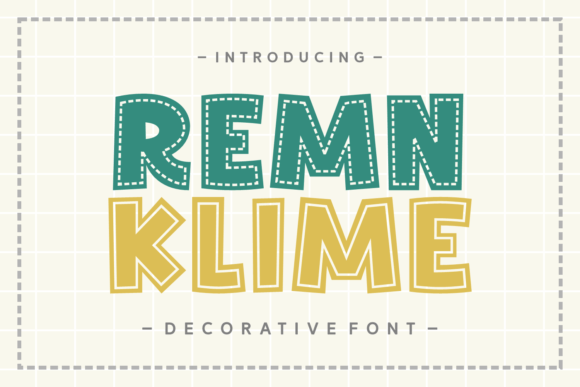
At its core, Remn Klime is engineered as a statement-making display font. Unlike body text typefaces designed for long-form reading, display fonts like Remn Klime are optimized for short bursts of text at larger sizes. The defining characteristic of Remn Klime lies in its clean lines and modern aesthetic. It eschews ornate serifs or overly decorative flourishes in favor of a geometric precision that feels both industrial and sophisticated.
The font exudes a sense of strength through its stroke consistency and character spacing. When applied to a headline, the letters stand tall and confident, creating a powerful presence that anchors the design. This quality makes it particularly effective for titles where the goal is to stop the viewer's eye immediately. The contemporary flair of Remn Klime allows it to fit seamlessly into minimalist layouts, where the typography itself becomes the primary graphic element rather than just a vessel for information.
Distinguishing Features and Structural Elements
What sets Remn Klime apart from generic sans-serif options is its subtle modulation in thickness and the specific angles of its terminals. While many modern fonts lean heavily on perfect circles or uniform widths, Remn Klime introduces slight variations that add character without compromising readability. These nuances give the font a "human" touch despite its rigid structure, preventing it from feeling cold or robotic.
Furthermore, the open counters—the enclosed spaces within letters like 'a', 'e', and 'o'—are generously sized. This design choice ensures that even when the font is scaled down slightly or used in lower-resolution environments, the characters remain distinct and do not blur together. For designers working across multiple platforms, from high-definition posters to mobile web banners, this level of clarity is a significant practical advantage.
Comparing Remn Klime with Alternative Display Styles
To make an informed decision about typography, it is necessary to compare Remn Klime against other common approaches in the display font category. The market offers a wide range of options, from ultra-bold condensed fonts to expansive, airy scripts. Understanding where Remn Klime fits within this spectrum helps clarify its role in a design toolkit.
When compared to heavy, blocky slab serifs, Remn Klime offers a lighter, more agile feel. Slab serifs can sometimes dominate a layout so aggressively that they overwhelm supporting content. In contrast, Remn Klime provides strong visual impact while maintaining enough negative space to allow surrounding elements to breathe. This balance is crucial for designs that require hierarchy but also need to guide the reader toward secondary information.
Conversely, when evaluated against thin, delicate geometric sans-serifs, Remn Klime demonstrates superior visibility. Thin fonts often struggle with legibility on screens or in print formats with lower ink coverage. Remn Klime’s robust stroke width ensures that the message remains clear regardless of the medium. However, this comes with a tradeoff: if a project requires an extremely elegant, whisper-quiet aesthetic, Remn Klime might feel too assertive. In such cases, a lighter weight alternative would be more appropriate.
The Tradeoffs of Bold Typography
Choosing a font like Remn Klime involves weighing the benefits of high impact against potential limitations. The primary strength is its ability to convey authority and modernity instantly. This makes it ideal for industries such as technology, finance, and urban lifestyle brands where confidence is a key selling point. However, the very traits that make it effective for headlines can be detrimental for body copy.
Using Remn Klime for paragraphs of text would likely result in reader fatigue due to its density and lack of the subtle curves that aid in rapid word recognition. Therefore, the decision to use this font should be strictly limited to titles, pull quotes, logos, or call-to-action buttons. Designers must recognize that versatility in this context does not mean universal application; rather, it means excelling in its specific niche while acknowledging where other tools are better suited.
Ideal Use Cases and Strategic Application
The effectiveness of Remn Klime is most evident when deployed in contexts that demand a strong visual hierarchy. Posters, event flyers, and social media graphics benefit immensely from its distinctive style. In these formats, the font acts as a beacon, drawing the audience in before they even process the accompanying imagery or smaller text.
For web design, Remn Klime serves as an excellent choice for hero section headlines. On a landing page, the first few seconds are critical for capturing user interest. A headline rendered in Remn Klime establishes a tone of professionalism and forward-thinking immediately. It pairs well with ample white space and high-contrast color schemes, allowing the text to pop without competing with background elements.
Branding projects also find a natural home for this typeface. Companies looking to rebrand or launch new product lines often seek a font that signals a shift toward the future. Remn Klime’s clean lines suggest efficiency and innovation, making it a suitable companion for startups and established firms alike that wish to project a modern image. However, it is less suitable for heritage brands or those relying on traditional, classic aesthetics, where a serif or script font might communicate trust and history more effectively.
Navigating Limitations and Decision Factors
While Remn Klime is a powerful tool, it is not a one-size-fits-all solution. Designers should consider the emotional tone required by the project. If the goal is to evoke warmth, nostalgia, or playfulness, the stark geometry of Remn Klime may feel out of place. In these instances, exploring alternatives with softer edges or more organic shapes would be a wiser strategic move.
Another factor to consider is the complexity of the message. Because Remn Klime is so visually dominant, it works best with concise, punchy copy. Long, complex titles can become difficult to parse quickly. The font demands brevity and clarity. If the content requires nuance and length, pairing Remn Klime with a highly legible, neutral body font is essential to maintain overall readability.
Making the Final Choice
Ultimately, the decision to incorporate Remn Klime into a design project should be driven by the specific communication goals of the brand or campaign. Its value lies in its ability to elevate visuals with a touch of sophistication and strength. By understanding its strengths—such as its clean lines, modern aesthetic, and powerful presence—and its limitations regarding body text usage and emotional tone, designers can leverage it effectively.
For those evaluating their typography options, Remn Klime represents a solid middle ground between aggressive boldness and refined minimalism. It is a resource that, when used correctly, ensures every word stands out. However, it requires a disciplined approach to layout and content length. By treating it as a specialized instrument rather than a default setting, creators can maximize its impact and ensure their designs resonate with their intended audience.