Evaluating Mocha Monday: A Practical Guide to Its Design and Application
In the landscape of digital typography, finding a typeface that balances professional utility with emotional resonance is often a challenge for designers and brand managers. Mocha Monday has emerged as a distinct option in this space, offering a playful yet refined aesthetic that appeals to a specific set of design needs. Unlike standard serif or sans-serif fonts that prioritize pure legibility at the expense of character, Mocha Monday is engineered to convey softness and happiness through its rounded letterforms. For adults navigating branding projects, from creating personal logos to designing stationery, understanding where this font fits within a broader typographic strategy is essential.
This evaluation explores the structural characteristics of Mocha Monday, compares it against other display categories, and outlines the scenarios where its unique traits provide the most value. The goal is to provide a clear framework for deciding whether this typeface aligns with your project's objectives or if an alternative approach might serve you better.
The Structural Identity of Mocha Monday
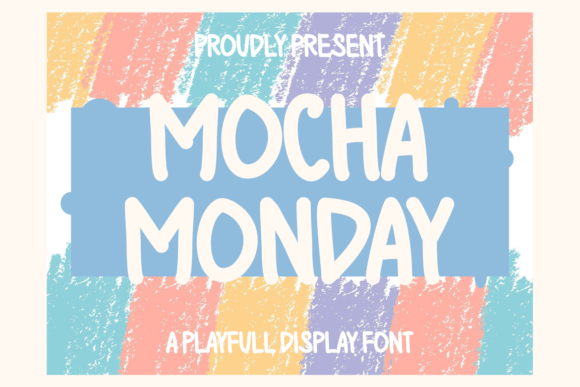
To understand the utility of Mocha Monday, one must first analyze its construction. At its core, this is a display font designed specifically for headlines and short-form text rather than body copy. The defining characteristic of the typeface is its "soft and rounded touch." Every letterform avoids sharp terminals and hard edges, replacing them with curves that mimic the organic shapes found in nature or hand-drawn elements.
This design choice is not merely decorative; it serves a psychological function. In color theory and design psychology, rounded shapes are frequently associated with approachability, safety, and warmth. When applied to a brand identity, these attributes can subconsciously signal to an audience that the business is friendly, accessible, and positive. This makes Mocha Monday particularly effective for industries centered around lifestyle, wellness, education, and creative services.
However, the distinctiveness of the font also introduces limitations. Because the letters are stylized with significant curvature, the x-height and stroke width vary in ways that can reduce legibility when scaled down. While the font excels as a logo or a large header on a poster, it is generally unsuitable for paragraphs of text. Users evaluating this resource should recognize that its strength lies in impact and mood setting, not information density.
Comparing Display Fonts: Mocha Monday vs. Traditional Categories
When selecting a typeface, the decision often comes down to choosing between different categories of display fonts. To make an informed choice, it helps to compare Mocha Monday with other common alternatives such as geometric sans-serifs, handwritten scripts, and slab serifs.
- Geometric Sans-Serifs: Fonts like Futura or Montserrat are built on mathematical precision. They offer high legibility and a modern, clean look. If a brand requires a sense of corporate stability or technological advancement, a geometric font is usually the superior choice. Mocha Monday, by contrast, sacrifices some of that rigidity for personality. It feels less "corporate" and more "human."
- Handwritten Scripts: Script fonts simulate handwriting and often feature connected strokes. While they share the "cute" factor with Mocha Monday, they can sometimes appear too casual or difficult to read if the style is overly ornate. Mocha Monday offers a middle ground; it retains the whimsy of a script but maintains the structure of a block letter, making it easier to integrate into layouts without compromising clarity.
- Slab Serifs: These fonts feature thick, block-like feet and are known for their bold, authoritative presence. They are excellent for posters and invitations but lack the inherent softness of Mocha Monday. If the goal is to evoke happiness and playfulness, a slab serif may feel too heavy or serious.
The tradeoff here is clear: Mocha Monday trades the versatility and neutrality of a standard sans-serif for a specific emotional tone. It is a specialized tool rather than a general-purpose one. Designers looking for a font that can do everything—from headers to footnotes—might find it limiting. However, those seeking a focal point that immediately establishes a warm brand voice will find it highly effective.
Ideal Use Cases and Branding Applications
The versatility of Mocha Monday shines in specific contexts where visual appeal and emotional connection are prioritized over dense information delivery. Based on its design parameters, several use cases stand out as optimal applications.
Logos and Brand Markers
For startups and small businesses, a logo is often the first point of contact with a customer. Mocha Monday is well-suited for logos that need to communicate friendliness. Think of a children's boutique, a coffee shop focusing on community, a yoga studio, or a creative agency. The rounded edges prevent the logo from appearing aggressive, while the bold weight ensures it remains memorable.
Invitations and Stationery
Personal events and correspondence benefit greatly from a font that feels inviting. Whether designing wedding invitations, birthday party cards, or personalized stationery, Mocha Monday adds a layer of care and thoughtfulness. The "playful cute" nature of the font elevates the perceived effort put into the design, making the recipient feel valued.
Social Media Graphics and Blog Headers
In the fast-paced environment of social media, visuals must stop the scroll. Using Mocha Monday for blog headers or Instagram quote graphics creates a strong visual hierarchy. The font stands out against plain backgrounds and pairs well with vibrant colors or pastel palettes. It is particularly effective for quote posts where the message itself is meant to inspire or uplift.
Posters and Ribbons
For physical marketing materials like event posters or sale ribbons, the font's large-scale readability is an asset. The curves draw the eye, and the overall shape suggests a celebration or a special occasion. It works well in combination with other fonts to create a balanced composition.
Decision Factors: When to Choose Alternatives
While Mocha Monday is a robust option for many projects, it is not a universal solution. There are specific scenarios where relying on this font could detract from the intended message. Understanding these limitations is crucial for maintaining professional standards.
Avoid for Long-Form Text: As previously noted, the rounded, stylized nature of the letters makes reading long passages difficult. If your project involves a newsletter body, a website article, or a brochure with substantial text, Mocha Monday should be reserved for titles only. Pairing it with a neutral, highly legible sans-serif for body copy is a best practice.
Consider the Industry Context: Not all brands benefit from a "soft and happy" aesthetic. Industries such as law, finance, healthcare (specifically emergency or clinical sectors), and heavy manufacturing often require a more serious, authoritative, or precise typographic voice. In these contexts, the playfulness of Mocha Monday might undermine the brand's credibility. A client in these fields would likely be better served by a traditional serif or a clean, modern sans-serif.
Legibility Constraints: If the final output will be viewed at very small sizes, such as fine print on a label or a thumbnail image on a mobile device, the intricate curves of Mocha Monday may blur or become indistinct. In situations where micro-legibility is paramount, simpler typefaces with higher contrast and sharper definitions are safer choices.
Practical Integration Strategies
For those who decide that Mocha Monday is the right fit, successful integration depends on how it is paired with other design elements. Because the font is inherently expressive, it often works best when allowed to breathe.
- Whitespace is Key: Do not crowd the letters. The rounded forms need space to define their shape. Generous margins and line spacing will enhance the "soft" feeling rather than cluttering it.
- Color Pairing: The name suggests warm tones, but the font is versatile. Earthy browns, creamy whites, and soft pastels complement its nature perfectly. However, it can also pop against dark backgrounds for a modern twist.
- Font Pairing: To maintain balance, pair Mocha Monday with a simple, unobtrusive font for supporting text. A minimal sans-serif like Open Sans or Lato provides a clean backdrop that lets the personality of Mocha Monday shine without competing for attention.
Ultimately, the decision to use Mocha Monday should be driven by the emotional response you wish to elicit from your audience. If the goal is to create a sense of joy, comfort, and approachability, this font offers a compelling solution. By weighing its strengths against the specific requirements of your project and considering the potential tradeoffs, you can ensure that your typographic choices support your broader communication goals effectively.