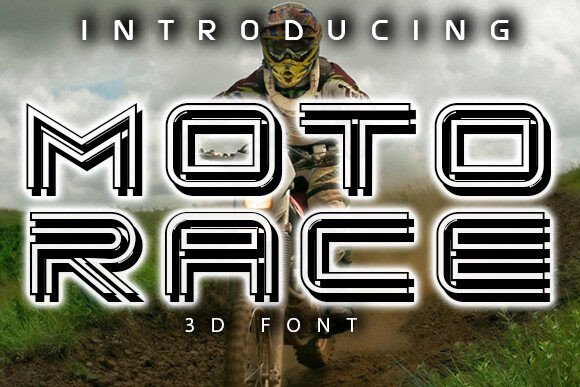
Evaluating Moto Race for Your Design Projects
In the realm of digital typography, selecting the right typeface is a critical decision that influences readability, brand perception, and overall aesthetic impact. Moto Race is a display font characterized by its dynamic, high-velocity appearance, often evoking the imagery of speed, motorsports, and modern machinery. While it offers a distinct visual style suitable for specific creative applications, it requires careful consideration regarding legibility and context before integration into a project. This evaluation aims to provide a balanced perspective on when and how to utilize this typeface effectively.
Understanding the Visual Identity of Moto Race
Moto Race belongs to the category of display fonts, which are designed primarily for headlines, logos, and short bursts of text rather than body copy. Its structural design typically features slanted letterforms, sharp angles, and exaggerated proportions that simulate motion. The aesthetic is heavily influenced by automotive culture, racing liveries, and industrial design. When viewed at large sizes, the font creates an immediate sense of energy and forward momentum.
The character set usually includes uppercase letters with a condensed width, allowing designers to fit more text into a horizontal space without losing visual weight. Some variations may include stylistic alternates or ligatures that enhance the mechanical feel of the text. However, because the design prioritizes stylistic flair over traditional typographic rules, the spacing between characters (kerning) can be tight, and the distinction between similar shapes like "I", "l", and "1" may be less pronounced than in standard sans-serif fonts.
Reasons to Consider Moto Race
Designers might turn to Moto Race when their project requires a specific thematic connection to speed, competition, or technology. It is particularly effective for projects where the primary goal is to grab attention instantly. The font's aggressive styling makes it a strong candidate for:
- Event Promotion: Posters and flyers for car shows, motorcycle rallies, or extreme sports events benefit from the font's inherent association with velocity.
- Apparel Branding: T-shirts and merchandise often rely on bold, graphic typography that reads well from a distance. The condensed nature of the font allows for impactful slogans on fabric.
- Gaming and Entertainment: Titles for video games, YouTube thumbnails, or social media banners related to racing simulations or action genres align well with this aesthetic.
- Product Packaging: Items related to automotive accessories, energy drinks, or tech gadgets can use the font to convey power and performance.
The primary advantage of using this font is its ability to communicate a mood without the need for excessive imagery. A headline in Moto Race immediately signals excitement and intensity to the viewer.
Benefits and Tradeoffs
While the visual impact of Moto Race is significant, there are practical tradeoffs that must be weighed against the benefits. The most notable benefit is versatility within its niche; it works across various media, from digital screens to printed materials, provided the size remains large enough to maintain clarity.
However, the tradeoff lies in legibility. Because display fonts like this are optimized for headlines, they perform poorly in small point sizes or long paragraphs. Attempting to use Moto Race for body text will result in a reading experience that is fatiguing and difficult to parse. Additionally, the stylized nature of the letters can sometimes lead to ambiguity. For instance, the lowercase "a" or "g" might have unique forms that differ significantly from standard expectations, potentially confusing readers if not used carefully.
Another consideration is the potential for visual clutter. If paired with other busy graphics or complex backgrounds, the intricate details of the font may get lost. Unlike neutral sans-serifs that recede into the background, Moto Race demands attention, which can overwhelm a layout if not balanced with ample white space.
Situations Where Alternatives Are Preferable
Despite its strengths in specific contexts, there are scenarios where choosing an alternative typeface is the more prudent decision. If the project involves detailed information, such as instructions, terms of service, or narrative content, a standard serif or sans-serif font is necessary for readability. In these cases, the decorative elements of Moto Race become a hindrance rather than a help.
Furthermore, brands aiming for a tone of sophistication, elegance, or minimalism should avoid this font. Its aggressive, loud personality clashes with designs intended to convey calmness, luxury, or understated professionalism. For example, a law firm, a healthcare provider, or a high-end fashion boutique would likely find the font inappropriate for their brand identity.
If the target audience is broad and includes older demographics who may struggle with reduced legibility, a more conventional typeface is safer. Similarly, for projects requiring strict accessibility compliance, the unconventional shapes found in Moto Race may present barriers for users with visual impairments or dyslexia.
Practical Decision-Making Insights
To determine if Moto Race aligns with your goals, consider the following checklist before finalizing your design:
- Assess the Text Length: Is the text limited to a headline, logo, or short slogan? If you need to write more than a few words, reconsider using this font for the entire message.
- Evaluate the Medium: Will the design be viewed up close or from a distance? Large format prints and billboards work well, but mobile app interfaces with small screens may require a simpler font.
- Check Color Contrast: Ensure the font color stands out sharply against the background. Complex fonts lose definition if the contrast ratio is too low.
- Pair with Complementary Fonts: If you choose Moto Race for headers, pair it with a clean, highly readable sans-serif for body text. This combination balances the visual impact with functional readability.
- Test for Legibility: Print a sample or view it on the actual device where it will appear. Ask someone unfamiliar with the design to read it quickly to ensure the message is clear.
Ultimately, the decision to use Moto Race should be driven by the specific narrative of the project. It is a powerful tool for creating a sense of urgency and excitement, but it is not a universal solution for all typography needs. By understanding its limitations and strengths, designers can leverage its unique characteristics to create compelling visuals without compromising the user experience.
Conclusion
Moto Race serves as a specialized asset in a designer's toolkit, best reserved for moments where a bold, kinetic statement is required. It excels in posters, flyers, and t-shirts where the message is short and the context supports themes of speed and power. However, its lack of suitability for body text and formal settings means it should be used sparingly and strategically. By weighing the aesthetic appeal against functional requirements, creators can decide whether this font truly enhances their design or if a more versatile alternative would better serve their objectives.