Clivas: A Quirky Display Font for Strategic Design Workflows
In the crowded landscape of digital typography, finding a typeface that balances personality with professional utility is often a challenge. Clivas emerges as a unique solution to this problem, offering a display style that is both visually arresting and functionally adaptable. For designers, marketers, and content creators who need to cut through the noise without sacrificing readability or brand integrity, Clivas provides a distinct aesthetic edge. This article explores how to integrate Clivas into your creative process, from initial concept development to final asset deployment, ensuring it serves your project goals effectively.
Understanding the Role of Clivas in Visual Communication
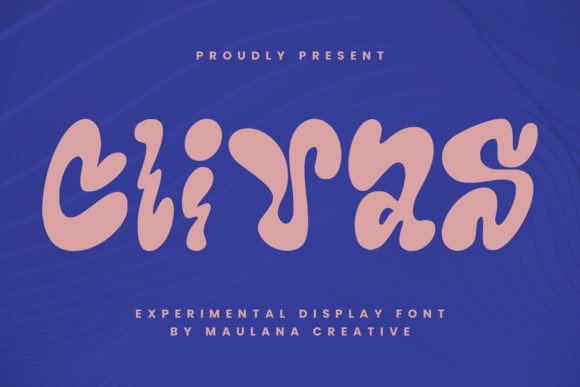
Before integrating any new asset into a workflow, it is essential to understand its specific characteristics and limitations. Clivas is not a workhorse serif designed for dense body text; rather, it is a display font engineered to capture attention. Its quirky nature stems from irregular stroke widths, playful terminals, and a rhythmic structure that feels hand-crafted yet digitally precise. This makes it an ideal candidate for headlines, logos, packaging, and social media graphics where immediate visual impact is the primary objective.
Within a broader design process, Clivas functions as the "hook." It is the element that stops the scroll or draws the eye to a key message. When planning a campaign or a rebrand, identifying where this hook needs to land is the first step. If your strategy relies on conveying trust through traditional stability, Clivas might be too eccentric. However, if your goal is to signal creativity, approachability, or modern innovation, Clivas fits naturally into the hierarchy. Understanding this distinction prevents the common pitfall of forcing a display font into contexts where it compromises legibility or tonal consistency.
Integrating Clivas into Project Planning Phases
The successful use of Clivas begins long before the first pixel is placed. During the pre-production phase of a project, whether you are outlining a marketing campaign or designing a book cover, typography selection should be treated as a strategic decision alongside color theory and layout composition.
Evaluation and Mood Boarding
Start by evaluating your project's emotional targets. Does the brief call for whimsy, boldness, or a touch of retro charm? Create mood boards that feature Clivas alongside other potential typefaces. Observe how its quirks interact with different imagery. Because Clivas has such a strong character, it pairs best with clean, minimalist layouts that allow the letterforms to breathe. In this stage, test Clivas against various background textures and colors to ensure the contrast remains high enough for accessibility standards while maintaining its stylistic flair.
Compatibility Checks
Once Clivas is shortlisted, assess its compatibility with your existing brand assets. If you are working within an established ecosystem, does Clivas clash with your current logo or secondary fonts? A practical workflow involves creating a temporary style guide. Pair Clivas with a neutral sans-serif or a classic serif for body copy. This pairing ensures that while the headline grabs attention, the supporting text remains easy to read. This combination creates a balanced visual rhythm, preventing the overall design from feeling chaotic or overwhelming.
Execution: Applying Clivas in Creative Workflows
During the execution phase, the focus shifts to technical implementation and refinement. How you manipulate Clivas can significantly alter the final outcome. Unlike rigid geometric fonts, Clivas responds well to specific typographic treatments that enhance its inherent personality.
Kerning and Spacing Adjustments
One of the most critical steps when using a quirky display font is manual kerning. Automated spacing algorithms often struggle with the irregular shapes found in fonts like Clivas. Take the time to adjust the space between letters manually, particularly in short headlines or logotypes. Tightening the spacing can create a more cohesive, solid block of text, while increasing tracking (letter-spacing) can lend an air of elegance and sophistication. Experiment with these variables to find the sweet spot that aligns with your design intent.
Contextual Variations
Clivas shines when used in varied contexts, but versatility requires restraint. Avoid stretching or distorting the font beyond its native proportions, as this can distort the carefully crafted curves and lines that define its character. Instead, leverage the weight variations available in the font family, if applicable, or play with size contrasts. Using a massive Clivas headline against a tiny, understated subhead creates a dynamic tension that guides the viewer's eye through the content hierarchy efficiently.
Cross-Platform Consistency
For digital projects, consider how Clivas renders across different devices and platforms. Web fonts require careful optimization to ensure fast loading times without sacrificing rendering quality. Test the font on mobile screens, tablets, and desktops to verify that the intricate details remain visible at smaller sizes. If the font becomes illegible on a mobile viewport, consider using a simplified version or restricting its use to larger screen formats where the details can be appreciated.
Workflow Integration and Tool Compatibility
Efficiency in design workflows depends heavily on tool compatibility. Clivas must integrate smoothly with the software stack you already use, whether that includes Adobe Creative Cloud, Figma, Canva, or specialized publishing tools.
- Adobe Illustrator and Photoshop: These industry standards offer robust support for OpenType features. Ensure you have the correct file format installed to access all glyphs and alternate characters. Use the Character panel to fine-tune vertical scaling and horizontal width without compromising the vector paths.
- Figma and Web Design Tools: For UI/UX designers, embedding Clivas via variable fonts or standard web font kits is crucial. Check that the font loads correctly within the component library to maintain consistency across team members. This prevents version control issues where one designer sees a slightly different rendering than another.
- Publishing Software: If you are preparing print materials, verify that the font outlines are crisp and free of aliasing artifacts. Convert text to outlines only after finalizing all edits to preserve editability during the review process.
Collaboration is another key factor. When working with a team, document your usage rules for Clivas in a shared style guide. Specify which weights are approved for headlines versus subheads, and provide examples of incorrect usage. This documentation acts as a quality control measure, ensuring that every stakeholder—from the copywriter to the developer—understands how to deploy the font correctly.
Long-Term Considerations and Quality Control
Adopting a new typeface like Clivas is a long-term investment in your brand's visual identity. To maximize its value, establish a routine for auditing its performance over time. Monitor user engagement metrics on campaigns where Clivas was featured. Did the click-through rates improve? Did the brand recall increase? These data points help validate the decision to use a quirky display font over a safer, more conventional choice.
Furthermore, stay aware of design trends. While Clivas offers a timeless quirky appeal, the context in which it is used evolves. Regularly review your brand assets to ensure the font still resonates with your target audience. If your business pivots toward a more corporate direction, you may need to phase out Clivas in favor of something more neutral, or conversely, lean harder into its personality if the market demands more authenticity and warmth.
Maintaining File Organization
Finally, organization is paramount for long-term usability. Keep your font files backed up in a secure, accessible location. Maintain a clear naming convention for files that utilize Clivas to avoid confusion down the line. Whether you are archiving a completed project or handing off assets to a new agency, having a clean, organized library ensures that the font remains a reliable asset rather than a source of technical debt.
Conclusion
Clivas represents more than just a collection of letters; it is a strategic tool for differentiation in a saturated market. By understanding its unique characteristics and integrating it thoughtfully into your planning, execution, and quality control processes, you can harness its quirky charm to elevate your visual communication. Whether you are a freelancer crafting a personal portfolio or a marketing director launching a global campaign, Clivas offers the flexibility and impact needed to make your message stand out. The key lies in disciplined application—using the font where it adds value, pairing it wisely, and maintaining consistency across all touchpoints.