Ibohim: A Whimsical Font for Creative Projects
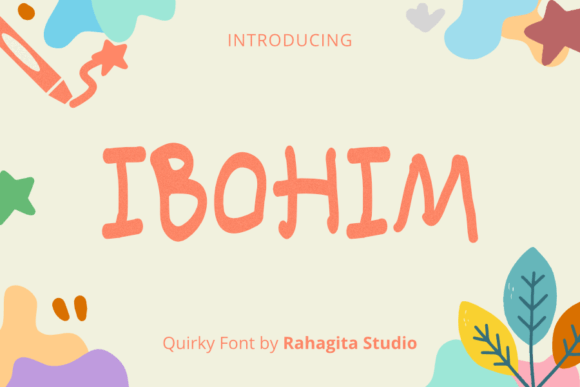
In the crowded landscape of digital typography, finding a typeface that genuinely captures the spirit of childhood without sacrificing readability is a rare challenge. Ibohim steps into this gap as a distinctive children's font designed to bring immediate joy and character to any visual project. It is not merely a collection of letters; it is a design tool that embodies imaginative freedom. Whether you are crafting an educational worksheet, designing a playful logo for a startup, or creating engaging social media graphics, Ibohim offers an irregular, cute, and simple aesthetic that resonates with both young audiences and adults who appreciate a touch of whimsy.
The Essence of Irregular Simplicity
What sets Ibohim apart from standard display fonts is its deliberate embrace of imperfection. In a world where many designs strive for rigid symmetry and sterile perfection, Ibohim celebrates the organic nature of hand-drawn lettering. The characters feature slight variations in weight, uneven baselines, and rounded edges that mimic the natural flow of a child's handwriting or a quick sketch in a notebook. This "irregular" quality is intentional; it softens the visual impact of text, making it feel approachable and friendly rather than authoritative or distant.
The simplicity of the design ensures that despite its playful nature, the font remains highly legible. Each character is constructed with clear, open forms that prevent visual clutter, even at smaller sizes. This balance between charm and clarity makes Ibohim a versatile asset for designers who need to convey warmth without compromising on communication. The font acts as an invitation to explore boundless creativity, encouraging users to step away from corporate minimalism and embrace a more human-centric design language.
Key Characteristics That Define the Look
When evaluating Ibohim for a specific project, several notable qualities stand out. First is the organic curvature. Unlike geometric sans-serifs that rely on perfect circles and straight lines, Ibohim utilizes soft, flowing strokes that suggest movement and energy. Second is the playful spacing. The kerning and tracking within the font family often allow for a slightly looser arrangement, which enhances the casual, relaxed vibe of the text. Finally, the font's versatility extends to its ability to pair well with more serious typefaces. Because Ibohim is so distinct, it works exceptionally well as a headline font paired with a neutral body text, creating a dynamic contrast that guides the reader's eye effectively.
These characteristics make Ibohim more than just a decorative element. They transform text into a visual experience. When a user encounters a message written in Ibohim, the tone shifts immediately. It signals that the content is safe, fun, and meant to be enjoyed. This psychological shift is crucial for brands and creators looking to build an emotional connection with their audience.
Practical Applications Across Industries
The utility of Ibohim extends far beyond children's books. While its primary association is with youth-oriented content, its unique voice has found a home in various professional and personal environments. Understanding where and how to apply this font can significantly elevate the effectiveness of your design strategy.
- Educational Materials: Teachers and curriculum developers use Ibohim to create engaging worksheets, flashcards, and classroom posters. The familiar, handwritten style reduces the intimidation factor for early readers, making learning feel like play rather than work.
- Branding and Packaging: Entrepreneurs launching products for families, such as organic snacks, toys, or baby care items, often select Ibohim for logos and packaging labels. It communicates safety, fun, and authenticity instantly.
- Digital Content and Social Media: Bloggers and content creators leverage Ibohim for Instagram stories, YouTube thumbnails, and blog headers. In a feed dominated by sleek, corporate aesthetics, Ibohim helps posts stand out and capture attention through its quirky charm.
- Event Design: From birthday invitations to community workshop flyers, event planners use this font to set a welcoming tone. It suggests that the event will be interactive, joyful, and free from rigid formalities.
- Publishing and Illustration: Authors and illustrators incorporate Ibohim into storybooks and graphic novels to differentiate dialogue or narration from the main text, adding a layer of personality to the narrative voice.
Enhancing User Experience Through Typography
Beyond mere aesthetics, the choice of font impacts user experience (UX) and engagement. In digital environments, where attention spans are short, the visual hierarchy established by a font like Ibohim can guide users more effectively. For instance, using Ibohim for call-to-action buttons or key headlines can increase click-through rates by making the interface feel less transactional and more conversational. The font's inherent friendliness lowers barriers to entry, encouraging users to interact with the content longer.
For marketers, this translates to better retention and brand recall. A brand that uses a consistent, emotionally resonant typeface builds a stronger identity. Ibohim allows businesses to humanize their digital presence, fostering a sense of community and trust that generic fonts often fail to achieve.
Strategic Implementation and Considerations
While Ibohim is a powerful tool, it requires thoughtful implementation to maximize its potential. As with any expressive typeface, moderation is key. Using Ibohim for large blocks of body text can lead to fatigue due to its irregular shapes, which demand more cognitive processing from the reader than standard serif or sans-serif fonts. Therefore, it is best reserved for headlines, subheads, short captions, and accent text.
When selecting Ibohim for a project, consider the context and the medium. On mobile screens with limited resolution, ensure that the font size is sufficient to maintain legibility. The intricate curves of the characters may lose definition if scaled down too small. Additionally, think about color pairing. Because Ibohim has a soft, rounded structure, it pairs beautifully with vibrant, saturated colors as well as pastel palettes. Avoid pairing it with overly aggressive or dark backgrounds that might obscure the delicate details of the letterforms.
Another practical consideration is licensing. If you are using Ibohim for commercial purposes, such as product packaging or paid advertisements, verify the license terms to ensure compliance. Many creative professionals overlook this step, only to face legal hurdles later. Ensuring you have the right permissions protects your business and respects the work of the font designer.
Final Thoughts on Creative Freedom
In conclusion, Ibohim represents more than just a typographic choice; it is a statement of values. By choosing this font, you are signaling a commitment to creativity, inclusivity, and joy. It empowers designers, educators, and entrepreneurs to break free from conventional constraints and inject personality into their work. Whether you are enlivening a classroom, launching a new product line, or simply sharing a personal story online, Ibohim provides the perfect vehicle to captivate minds and spark imagination.
The true value of Ibohim lies in its ability to connect. It bridges the gap between the creator and the audience, turning static text into a shared experience of wonder. As you navigate your next design project, remember that the right font can do heavy lifting for your message. With Ibohim, every character becomes a spark, igniting the limitless possibilities of what your project can become.