Desolosed: The Definitive Black Metal Label Font for Dark Aesthetics
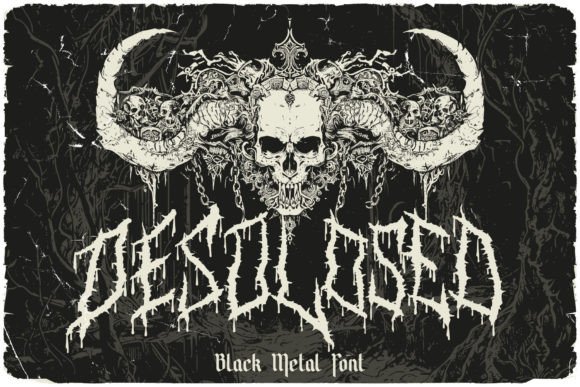
In the visual language of extreme music, typography is not merely a vehicle for text; it is an instrument of atmosphere. For album covers, merchandise, and band logos, the right typeface can convey aggression, mystery, and raw emotion before a single note is heard. Enter Desolosed, a meticulously crafted black metal label font designed to bring the chaotic elegance of the genre into your digital workflow. Whether you are a graphic designer creating a debut EP cover or a musician looking to brand your project with authentic grit, Desolosed offers a level of versatility that few other fonts in this niche can match.
The Anatomy of Chaos: Four Styles Per Character
What sets Desolosed apart from standard gothic or horror-themed typefaces is its commitment to organic variation. Most fonts rely on static characters that look identical every time they are typed, resulting in a robotic uniformity that often clashes with the handmade feel of black metal art. Desolosed solves this by providing four distinct styles for every letter, number, and basic punctuation symbol included in the set.
This feature is a game-changer for logo design. When you type "DESOLATED" using a standard font, each "E" looks exactly the same. With Desolosed, you can manually swap glyphs so that every instance of a letter has a unique texture, angle, and flourish. This mimics the hand-drawn aesthetic common in the genre, where artists often scratch out names with ink or carve them into wood. It allows designers to create a sense of movement and instability within the text itself, making the typography feel alive and unpredictable.
The inclusion of numbers and basic punctuation ensures that release dates, track listings, and copyright information do not have to be typeset in a generic sans-serif font that breaks the immersion. You can maintain the dark, jagged aesthetic across the entire layout, from the main title down to the smallest detail.
Duality in Design: Smudged vs. Clean Variations
One of the most thoughtful aspects of the Desolosed family is its dual-style architecture. The font comes in two primary variations: one with smudges and one without. This duality provides a strategic advantage depending on the specific needs of your project and the medium in which it will appear.
The Smudged Variation: Raw and Organic
The version featuring smudges captures the essence of decay and grime. These subtle imperfections look like ink bleeding through paper, dust settling on a tombstone, or the residue of a frantic brushstroke. This style is perfect for:
- Album Artwork: Where high-resolution textures blend seamlessly with background imagery.
- Merchandise Printing: Especially on distressed t-shirts or patches where a worn-in look is desired.
- Atmospheric Posters: Creating a sense of age and history for tour announcements.
The smudges add depth and shadow, making the letters appear as if they are emerging from the darkness rather than sitting flat on top of it. It creates an immediate emotional connection to the themes of isolation and desolation inherent in the genre.
The Clean Variation: Sharp and Legible
Conversely, the clean version of Desolosed strips away the debris while retaining the aggressive, angular structure of the letterforms. This is crucial for applications where legibility is paramount. While the smudged version might struggle in very small sizes or against complex backgrounds, the clean variant holds its shape with precision.
This style is ideal for:
- Digital Interfaces: Website headers or streaming platform profiles where clarity matters.
- Social Media Graphics: Ensuring text remains readable on mobile screens.
- Print Layouts: Situations where the background image is too busy for additional texture.
By offering both options, Desolosed eliminates the need for designers to spend hours manually editing masks or applying filters to achieve a specific look. You simply switch the font style to match the context.
Integrating Desolosed into Modern Creative Workflows
Adopting a specialized font like Desolosed fits naturally into modern graphic design workflows, particularly those centered around Adobe Illustrator, Photoshop, or InDesign. The font is built to be non-destructive, meaning you can change the text at any point during the design process without losing the integrity of the layout.
For designers working on band branding, the workflow becomes incredibly efficient. Instead of outsourcing logo creation to a specialist illustrator who charges hundreds of dollars, a designer can use the four alternate glyphs per character to construct a custom logo in minutes. By selecting different variants for each letter, you can tweak the balance and flow until the wordmark feels perfectly weighted. This democratizes high-end branding, allowing independent artists to produce professional-grade visuals on a budget.
Furthermore, the font's compatibility with vector software ensures scalability. Whether you are designing a massive banner for a festival stage or a tiny icon for a mobile app, Desolosed retains its sharp edges and intricate details without pixelation. This scalability is essential in today's multi-platform media landscape, where assets must perform flawlessly across various devices and print formats.
Practical Considerations for Designers and Musicians
While Desolosed is a powerful tool, understanding how to wield it effectively requires a bit of foresight. One common factor people consider before adopting a display font is readability. Because black metal fonts are inherently stylized, they should generally be reserved for headlines, titles, and short phrases. Using Desolosed for body text in long paragraphs would likely hinder comprehension and tire the reader's eyes.
Another consideration is the pairing of fonts. Desolosed demands attention, so it works best when paired with a simple, neutral sans-serif or serif font for supporting text. This contrast allows the aggressive nature of the black metal typeface to shine without overwhelming the viewer. For example, use Desolosed for the band name and album title, but switch to a clean Helvetica or Garamond for track listings and liner notes.
Color usage also plays a pivotal role. While black on white is the classic choice, the smudged variant of Desolosed interacts beautifully with textured backgrounds like fog, fire, or rotting wood. Experimenting with gradients or blending modes can further enhance the three-dimensional feel of the letters, making them pop off the screen or page.
Why Desolosed Stands Out in a Crowded Market
The market for metal fonts is saturated with low-quality knock-offs that lack character consistency or proper kerning. Many free alternatives suffer from broken spacing, missing glyphs, or a generic "scary" look that fails to capture the specific nuance of black metal aesthetics. Desolosed addresses these pain points directly.
The deliberate design of four styles per character ensures that no two words ever look exactly alike unless intended. This prevents the "copy-paste" look that plagues amateur designs. Additionally, the inclusion of both smudged and clean versions demonstrates a deep understanding of practical application. It acknowledges that a font used for a vinyl sleeve might need a different finish than one used for a website header.
Ultimately, Desolosed is more than just a collection of letters; it is a toolkit for storytelling. It empowers creators to infuse their projects with the raw energy and atmospheric depth that define the black metal genre. By choosing Desolosed, you are investing in a resource that respects the tradition of the art form while providing the flexibility needed for modern design challenges. Whether you are launching a new band, rebranding an existing act, or simply exploring the darker side of typography, this font family offers the perfect foundation for your vision.