Woodworks: A Textured Typography Solution for Rustic Design
In the crowded landscape of digital typefaces, finding a font that balances distinct character with functional readability is often a challenge. Woodworks emerges as a compelling solution for designers seeking to inject organic texture into their projects without sacrificing legibility. As a decorative display font, it mimics the rugged charm of wooden logs, drawing inspiration from 19th-century decorative typography. This approach offers a blend of historical elegance and modern utility, making it a versatile asset for various creative applications. Whether you are crafting vintage-style posters or refining a brand identity, understanding the specific strengths and limitations of Woodworks is essential for effective implementation.
The Core Aesthetic and Design Philosophy
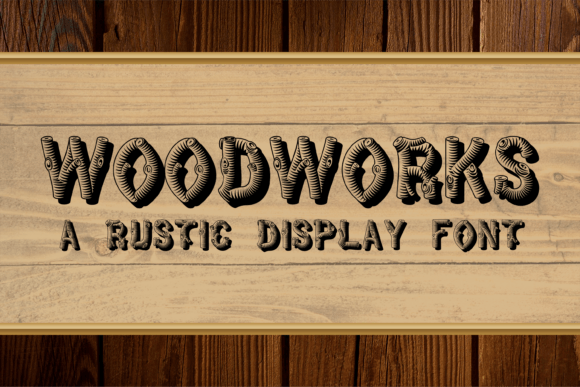
At its foundation, Woodworks is designed to replicate the tactile quality of timber within a typographic context. Each character is meticulously constructed to resemble stacked or hewn wooden logs, introducing a natural, textured feel that flat sans-serif or serif fonts cannot achieve. The design philosophy leans heavily on the visual language of the 19th century, a period known for ornate and illustrative lettering in broadsides and advertisements. However, the execution avoids the clutter often associated with older styles, ensuring the font remains accessible to contemporary audiences.
The primary strength of this typeface lies in its ability to evoke a sense of craftsmanship and durability. When text appears as if it were carved from wood, it subconsciously communicates stability and tradition. This makes Woodworks particularly effective for industries rooted in heritage, nature, or artisanal production. The intricate detailing does not overwhelm the viewer; instead, it adds depth and interest, transforming standard headlines into visual focal points. For professionals looking to move beyond generic stock imagery, this font provides an immediate atmospheric shift.
Functional Variations and Style Options
One of the most practical aspects of Woodworks is its availability in two distinct styles: Regular and Plain. These variations offer significant flexibility depending on the background complexity and the desired visual weight of the project.
- Regular Style: This version includes a subtle shadow effect that enhances the three-dimensional appearance of the logs. It is ideal for use against lighter backgrounds where the shadow helps separate the text from the canvas, creating a floating effect that mimics physical signage.
- Plain Style: Lacking the shadow, this variation presents a flatter profile. It is better suited for darker backgrounds, complex textures, or situations where the designer intends to apply custom drop shadows or effects in post-production software.
This duality ensures that Woodworks can adapt to different layout requirements without requiring extensive manual editing. The consistency between the two styles allows for cohesive branding across multiple touchpoints, such as packaging labels and digital banners. By offering these options, the font addresses a common pain point in display typography: the difficulty of maintaining legibility when layering text over busy backgrounds.
Performance in Real-World Applications
Evaluating a display font requires testing it in scenarios where it will actually be used. Woodworks performs exceptionally well in headline roles, logo design, and short-form copy. Its intricate design means it is not intended for body text; attempting to use it for paragraphs would result in poor readability and visual fatigue. Instead, its value is realized in eye-catching titles, event posters, and menu headers.
In the realm of print media, the font excels on materials that complement its rustic theme. Think of kraft paper invitations, brewery coasters, or woodworking workshop signage. The texture of the font interacts naturally with the grain of the paper, reinforcing the overall aesthetic. For digital applications, Woodworks holds up well on screens provided the resolution is sufficient to render the log details clearly. It is particularly effective in web headers, social media graphics, and email newsletter subject lines where grabbing attention is the primary goal.
A notable advantage in real-world use is the font's support for a comprehensive range of Western European characters. This ensures that designers working in English, French, German, or other Latin-script languages do not encounter missing glyphs or fallback characters. This reliability is crucial for professional workflows where last-minute localization or multilingual support might be required. It eliminates the need to manually swap out problematic characters, saving time during the production phase.
Usability and Workflow Integration
Despite its complex visual appearance, Woodworks maintains a clean file structure and predictable behavior within major design software suites. Users familiar with Adobe Illustrator, Photoshop, or InDesign will find the installation and usage straightforward. The kerning and spacing have been optimized to prevent the "log" shapes from colliding awkwardly, which is a common issue with highly stylized fonts.
However, there are practical considerations regarding scalability. Because the design relies on detailed textures to convey the look of wood, reducing the font size too much can cause the details to blur or disappear, leaving behind a blocky silhouette. It is recommended to use Woodworks at sizes large enough to preserve the integrity of the design—typically 18pt or larger for print and equivalent pixel dimensions for web. Additionally, while the font is robust, it may require slight manual adjustments in tight layouts to ensure optimal spacing between words, as the irregular width of log-shaped characters can affect alignment.
Ideal Use Cases and Target Audience
Woodworks is best suited for professionals and creators whose work benefits from a rustic, vintage, or organic narrative. Small business owners in sectors like agriculture, forestry, brewing, baking, and outdoor recreation will find this font aligns perfectly with their brand values. Entrepreneurs launching artisanal product lines can leverage the font to signal handcrafted quality and authenticity.
Marketers and content creators focusing on lifestyle niches also stand to gain. For example, a blog about sustainable living or a podcast about history could use Woodworks for episode titles or promotional graphics to establish a thematic connection immediately. Educators creating materials for history lessons or craft workshops can utilize the font to make learning materials more engaging and visually relevant to the topic.
Conversely, this font may not be appropriate for corporate finance, high-tech startups, or medical communications, where a sleek, minimalist, or sterile aesthetic is usually preferred. In those contexts, the heavy texture of Woodworks could clash with the desired message of precision and modernity. Understanding these boundaries is key to using the font effectively.
Long-Term Value and Design Flexibility
From a long-term perspective, Woodworks offers enduring value due to its timeless appeal. While trends in typography shift rapidly, the association between wood and nature remains constant. Unlike hyper-modern geometric fonts that may date quickly, the rustic charm of Woodworks has a classic quality that resists obsolescence. Investing in this typeface allows for consistent branding over years without the need for frequent redesigns.
The flexibility of the font extends to color customization. While the default appearance suggests brown tones, the vector-based nature of the characters allows them to be filled with any color palette. This opens up creative possibilities, such as using metallic gradients for a premium look or bright colors for playful, children-oriented designs. The underlying structure remains strong regardless of the color applied, ensuring the "wooden" illusion persists even when stylized.
Conclusion on Practical Utility
Woodworks represents a thoughtful intersection of historical inspiration and modern design needs. It successfully translates the tactile experience of wood into a digital format, providing a unique tool for designers who need to communicate warmth, tradition, and craftsmanship. With its dual style options, broad character support, and reliable performance in both print and digital media, it stands out as a practical resource for specific design challenges.
While it requires careful consideration regarding size and context, its strengths in headlines and branding are undeniable. For anyone looking to add a touch of wooden elegance to their projects, Woodworks offers the necessary flexibility and uniqueness to elevate a design from ordinary to memorable. By integrating this font strategically, creators can enhance their visual storytelling and connect more deeply with audiences who appreciate authentic, textured aesthetics.